Rust solo life shows how one player holds a monument against a whole server and still comes out ahead
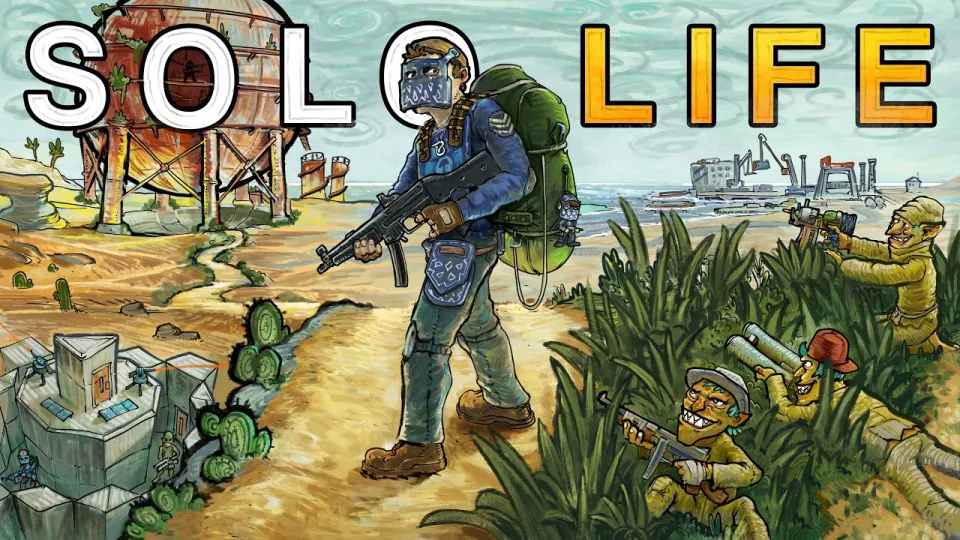
Video: Rust - THE SOLO LIFE V16
Need articles like this for your video? They help promote it on YouTube and Google — order them in the Telegram bot @sat_sit_bot. It writes articles around your video, embeds the video and publishes them on popular niche websites (no ads). Try it free: 50 articles on us.
· based on the channel Blooprint
Key takeaways
- Blooprint's Solo Life series returns with a V16 episode built around one goal: holding an OP monument completely alone while several neighbors try to push him out.
- The run leans on classic solo tools — a compact starter base, a parachute for quick repositioning, and monument control at Dome and Cargo.
- Raid defense is the centerpiece: one solo player plus a friendly neighbor holds a base against a group that spends far more time and explosives than the loot is worth.
- A one-tap eoka moment and a fast LR sight setup are the small mechanical details viewers latched onto.
- The episode lands right after the A Solo's Journey series, which is why the solo format is back in rotation on the channel.
Rust solo life is the practice of running a wipe alone — one player building, farming, fighting and defending without a team — and the latest Blooprint episode shows it working by holding a single OP monument against multiple hostile neighbors. The run is built on a small starter base, constant repositioning and a willingness to fight defensive raids rather than run from them. Anyone who wants to try the same approach can start by grabbing the free War Thunder bonus through the sponsor registration link, which supports the channel at no cost.
What holding a monument solo actually requires
Holding a monument alone in Rust means controlling the loot cycle at a high-value radtown long enough that other players cannot farm it comfortably, and the episode treats that as a logistics problem before a combat one. A solo cannot out-DPS a group in the open, so the work happens in preparation: knowing the crate and puzzle timings, keeping a route in and out, and storing loot close enough that a death costs minutes rather than hours.
The practical checklist that makes a monument hold survivable:
- Build within sprinting distance of the monument, not on top of it — a base on the monument footprint is the first thing raiders check.
- Keep a small, cheap core with the real loot in a second, less obvious room so a single wall break does not end the wipe.
- Farm the monument in short cycles and bank loot every trip instead of stacking a full inventory.
- Carry a parachute for vertical escapes; jumping off a monument and gliding away is faster than any ground route when a group is chasing.
- Track who is contesting the monument and when — most groups run predictable hours.
The Dome and Cargo are the two locations the run keeps returning to, because both reward a solo who knows the vertical layout and punish a group that has to move four players through tight catwalks.
Base setup and the starter that gets copied
A solo base in Rust is judged by cost per raid, not by size, and the episode's starter build follows the same logic players have been copying from other creators for years. The point is a compact footprint with layered doors, a sealed loot room and enough space to expand once the first good monument run pays out.
Key decisions for a solo starter:
- Build in a low-traffic grid near, but not inside, the monument's hot zone.
- Spend early scrap on tools and a workbench before walls; a solo who cannot farm efficiently loses the wipe in the first two hours.
- Keep a second small stash base or a hidden box cluster so a full raid does not reset progress.
- Upgrade the side facing the most likely raid direction first — groups rarely approach from the cliff side.
Viewers noticed the starter build and compared it to builds used by other solo-focused creators, which is a fair read: the meta for small bases is convergent because the constraints are the same for everyone.
Raid defense against a group that wastes its advantage
Raid defense is where the episode earns its runtime, and the lesson is that a defending solo has one structural advantage: the attackers have to bring the explosives, the time and the exposure. A group that spends ten to twenty minutes sieging a small solo base is not gaining momentum elsewhere on the map, and every minute spent on a cheap base is a minute not spent farming or raiding someone who matters.
The defense plays out in recognizable phases:
- Identify the breach point early and rotate inside rather than contesting the outer wall.
- Use narrow angles and doorways so only one attacker can engage at a time.
- Keep a secondary exit open so a push can be answered from an unexpected direction.
- Take the fight to the attackers' staging area once their explosives are committed — the loot is usually there, not on the players.
- Accept losses on outer structures to preserve the core and the loot room.
A friendly neighbor joining the defense turns a losing 1v3 into a workable 2v3, and that cooperation is the single most valuable thing a solo can cultivate on a server. Two solos with a shared interest in the neighborhood staying quiet will outlast a group that treats every base as a target.
Small mechanics that decide solo fights
The mechanical details in a solo run matter more than in group play, because there is no teammate to cover a mistake. Two moments stood out in this episode: a one-tap eoka kill at close range and a fast LR-300 sight setup used to win a mid-range exchange.
The eoka is a primitive pistol with a single shot and a swing-based firing mechanic, so a one-tap kill at point-blank range is partly timing and partly luck — but it is a real option for a solo who has lost a gunfight and needs a cheap reset. The LR-300 rewards a sight configuration that keeps the reticle clean at medium distance, and players who main the weapon tune that setup rather than running defaults.
Other habits that separate a surviving solo from a dead one:
- Night is not automatically safe; movement and sound matter more than visibility, and players regularly report seeing almost nothing in dark scenes.
- Parachutes convert height into distance, which makes monuments, cliffs and even cargo ships viable escape routes.
- Sound discipline — walking instead of sprinting near a base, closing doors, avoiding metal floors — prevents more raids than extra walls.
Why the solo format keeps pulling viewers back
Solo Rust content works because the stakes are legible: one player, one base, one mistake away from starting over. Group content blurs individual decisions into team comms, while a solo run makes every farm trip, every fight and every raid defense a discrete story with a clear cost.
The tone matters as much as the gameplay. A wipe in Rust is chaotic — offline raids, spawn fights, strangers on the beach — and the episodes that hold up are the ones that keep a calm, readable narration over that chaos rather than amplifying it. That is the consistent thread across the Solo Life series and the reason viewers describe the format as relaxing despite the game being anything but.
The timing also helped: this episode arrived shortly after the A Solo's Journey series wrapped, so the solo format returned almost immediately rather than going dormant.
Common questions from solo players
Solo players keep asking the same handful of things, and the answers are mostly about expectations rather than tricks.
- Can one player really hold a monument? Yes, but usually during off-hours or on a low-to-mid population server. On a full pop server, a solo holds a monument in short windows and rotates rather than camping it.
- Is a friendly neighbor worth the risk? Often yes. A non-aggression agreement with one nearby solo costs nothing and doubles your defensive capacity during a raid.
- What do you do when a group commits to raiding you? Defend the core, keep an exit, and make the raid expensive enough that the group decides the next base is a better use of explosives.
- How do you deal with night? Treat darkness as a sound problem. Move quietly, avoid lit areas and metal surfaces, and use height plus a parachute to leave a fight you cannot see.
Useful links
- War Thunder free bonus, PC and consoles: https://wtplay.link/blooprint
- War Thunder mobile: https://wtm.game/blooprint
- Twitch: https://www.twitch.tv/blooprint
- Kick: https://kick.com/blooprint
- TikTok: https://www.tiktok.com/@blooprintgames
The takeaway for anyone running Rust alone
Holding a monument solo is not about winning every fight — it is about making every fight cost the other side more than it costs you. The Blooprint episode demonstrates the formula clearly: a cheap layered base, short monument cycles, a parachute for exits, and at least one neighbor who would rather have a quiet grid than a raid. The mechanics matter, but the discipline of banking loot and picking fights on your own terms matters more. If you want the sponsor bonus that keeps this kind of solo content coming, use the War Thunder signup link — it is free and it supports the channel. The Solo Life series is produced by the Blooprint channel, which is the best place to follow the format as it develops.
Source: Rust - THE SOLO LIFE V16 · Markdown version
Questions & answers
Is it realistic to hold a monument as a solo player in Rust?
It is realistic in short windows, especially on low or medium population servers and during off-peak hours. A solo should rotate through the monument in farm cycles and bank loot each trip rather than trying to camp it for hours, because a group will eventually commit players to pushing you out.
How do you defend a small solo base against a larger group?
Defend the core instead of the outer walls, use doorways and tight angles so only one attacker can engage at a time, and keep a second exit open. The goal is to make the raid expensive enough in explosives and time that the group moves on to an easier target.
What is the point of a parachute in a solo run?
A parachute turns height into distance, so it works as an escape tool from monuments, cliffs and cargo ships. When a group is chasing you on the ground, gliding off a structure is usually faster than any running route.
Why do solo Rust videos feel calmer than the game actually is?
The game is chaotic, but a solo run has clear stakes and a single point of view, which makes it easy to follow. Creators who narrate decisions calmly instead of reacting to every fight produce a relaxed tone even when the wipe itself is a mess.